Friday, July 6, 2012

Long Live the Fireflies!


photo credit: www.firefly.org

Raise your hand if you love summer!  What can be bad about more daylight, fresher foods, and a more relaxed schedule? Even though we may all keep the same work hours in summer that we do the rest of the year, the extra daylight makes the season feel luxurious - as if you can finally get everything done on your to-do list and maybe read a book, too.

Recently, as a group of us were sitting on our porch, the fireflies came out. Winking and blinking in their ageless mating game, these specially endowed cousins of the common beetle sent us all reminiscing about chasing them in our childhood yards  or watching our own kids wonder at the "lightning bugs" when they were younger.

Then the discussion turned to how we don't see them as much as we used to. Like frogs and bees, fireflies are declining due to the effects of human activity. Evidence is mounting that lawn chemicals kill the beetles both directly by poisoning these ground and tree dwellers and indirectly by killing the grubs and other insects the fireflies use for food. Light pollution is thought to inhibit them from lighting up - which means no offspring. After all, fireflies communicate by blinking their lights and if they can't find each other to mate, well, there goes the next generation. The paving of green spaces to make way for roads, shopping centers, and suburban driveways leaves less space for the beetles to live.

Because I love fireflies, I'm hoping others will join me in trying to protect them. You can read more about how simple actions can make your yard more hospitable to fireflies here and here.

Sometimes, when I'm especially fatalistic about what is happening to the world around us, I think of the things I'll miss the most once they are gone. Tigers and elephants and rhinos, definitely. Glaciers, certainly. Fireflies? Oh yeah. How tragic to lose that tiny bit of summer magic from our lives - especially when a few alterations to how we live could preserve them.

###

Monday, June 4, 2012

Arsenic and Old Hens


Arsenic, that classic chemical that villains use to do away with people in old timey murder mysteries, continues to be in the news. First, we learned that arsenic fed to chickens (more on that in a bit) is stored in their muscles, which we ingest when we enjoy a roast bird for dinner. And if that's not enough, the arsenic-containing wastes from the chickens may be spread as fertilizer on fields, where the arsenic becomes an ecotoxin that is carried by runoff into streams, wells, and other bodies of water.

So we eat it, then we drink it.

But there is a glimmer of good news: the state of Maryland has quietly banned the use of arsenic-containing chicken feeds. Even though it is just one state, Maryland's ban is significant because there are approximately 1,700 poultry producers near the Chesapeake Bay, which, combined, produce about 11 million chickens each week. The arsenic-containing wastes from these birds is significant and has resulted in contamination of nearby wells as well as high levels of arsenic in Chesapeake Bay.

Years ago, research showed that the arsenic-treated lumber used in children's playsets and household decks was a major cause of arsenic exposure. In 2004, the EPA outlawed arsenic as a wood preservative, despite industry's pleas to place a warning label on the wood. The evidence is strong linking arsenic to all sorts of health ills, including cancer and decreased cognitive function. So why is it purposefully put into our food supply?

The answer reflects a problem inherent in factory farming: in order to supply large amounts of inexpensive food, the livestock industry needed to come up with ways to allow lots of animals to grow in close quarters. Some of those ways include dosing the animals with antibiotics to prevent infections,  supplying them with  growth hormones so that will they grow and go off to market more quickly than normal, trimming the beaks of chickens and the tails of hogs so that the animals do not injure each other, and adding arsenic to the chicken feed in order to kill intestinal parasites that inevitably grow in the feces produced by thousands of birds. It's a decidedly sad life for an animal grown in confinement, but if you're going to expect chicken to cost less per pound than a pint of good ice cream, then you should know that's the real price you pay.

So the banning of arsenic-containing feed is a positive step and should result in lowered levels of arsenic compounds in the environment and in our tummies. But the ban does not address the real problem those feeds were introduced to combat - parasites caused by extreme overcrowding. What do you think will happen next? Do you think poultry producers will opt to raise fewer chickens in a roomier environment, which will increase the price of chicken at the supermarket and likely decrease the growers' profits? Or do you think we'll see the introduction of yet another chemical to keep parasites at bay? I'm betting on the introduction of another chemical that will find its way into our food, water, and bodies. But I'd like to be proven wrong on this one, so let's watch Maryland closely to see how its poultry producers adjust to the new law. Maybe, just maybe, some truly innovative thinking will emerge.

### 

Interested in reading more about how arsenic and other environmental contaminants can harm humans at all stages of life? Here is a 2011 report from the National Research Council exploring these issues. The information about arsenic in on page 7, which includes a discussion of the research showing that early exposure to arsenic can decrease intelligence permanently. 


Friday, May 18, 2012

Childhood Vaccines: A Case of Collective Amnesia

Children in Nigeria line up to receive the smallpox vaccine, 1968.
In 1979, the World Health Organization (WHO) declared
the global eradication of smallpox and recommended
that all countries cease vaccination. 
Source: CDC
Not long ago, I was in the bleachers at one of my son's baseball games. It was one of those ordinary, and therefore quite wonderful, evenings. Nice weather, decent sports action, no place I'd rather be. Out of the corner of my eye, I saw a dad and two kids walk by and then stand by the bleachers to watch the game. Again, not unusual. However, what caused me to do a double take was the oldest child's extreme skin condition.

All of this child's visible skin was covered with angry-looking, red sores. Arms, hands, face, neck. The sores looked vaguely familiar, and then it hit me: This kid was walking around with chicken pox. Not trusting my own diagnosis, I leaned over to a physician/baseball mom near me and said, "Does that kid have chicken pox?" She nodded her head in affirmation and said, "I know his family. They don't vaccinate, and they infected him on purpose at a 'chicken pox party'."

I had to think about that for awhile.

From what I could tell, most of the kid's pox were scabbed over, which meant they weren't infectious. But I did notice some newer pox that looked more like blisters, meaning that they were potentially infectious. Even though I confess to a somewhat irrational cringe moment at being so close to this kid, I wasn't really worried about my own health. After all, I had a raging case of chicken pox in elementary school that rendered me immune. But looking around the bleachers, I saw a couple of grandparents and a baby. And that's when my noncommittal response to the chicken pox family turned into a more judgmental one. After all, the grandparents were at risk of developing chicken pox or activating shingles because of their aging immune systems, and the baby was definitely at risk because the chicken pox vaccine is not given until four or five years of age. And for all I knew, any one of the seemingly healthy middle-aged parents in attendance could have been immunocompromised from cancer treatment, HIV infection, or other conditions. Whatever thoughts I had about the chicken pox family's beliefs toward vaccination quickly became secondary to what I thought of this family being in a public venue with a perhaps-active and easily transmissible infectious disease, no matter how "certain" they were of the child's infection status.

Unfortunately, judging from vaccination trends, we can expect more and more of these exposures.

This past week, media outlets across the country carried news of the whooping cough outbreak in Washington state. The outbreak is huge - well over 1,000 cases, and one that

"could surpass the toll of any year since the 1940s, before a vaccine went into wide use," according to public health officials interviewed by The New York Times. 

The numbers are probably higher because many people with mild disease do not get a diagnosis. Further, the state is so strapped for cash that it is recommending foregoing the $400 diagnostic test and just prescribing antibiotics to those with the hallmark symptoms and exposure patterns, causing speculation that only 1 in 5 infections are being recorded.

The outbreak is directly attributable to that fact that families of 6% of school-age children in Washington have opted out of some or all of the recommended immunizations. That 6% is over the tipping point where even people with some degree of immunity through vaccination can have elevated risk of getting the disease. This is especially germane to whooping cough. Researchers have reformulated the whooping cough vaccine in recent years to reduce its side effects. As a consequence, the new vaccine is not as effective as older versions were, making the concept of herd immunity even more important for this particular disease.

In other words, individuals who received vaccinations and trusted others to do the same in order to keep herd immunity strong, were totally screwed over by families who decided to not only put their kids at risk, but also other people's kids (and grandparents, and so on).

I've written about this issue before, from an international perspective here and a link to a vaccine expert here. It is so concerning that we are exiting, voluntarily, the era of disease prevention through vaccination. Not because the vaccines don't work. No, modern vaccines work extremely well. So well, in fact, that younger generations do not remember how deadly or disfiguring certain diseases can be because they have never experienced them. If vaccination rates continue to slide, though, it's fairly clear that we all - regardless of our own vaccination status - will pay the price, either through disease or higher health care costs.


###


Friday, April 27, 2012

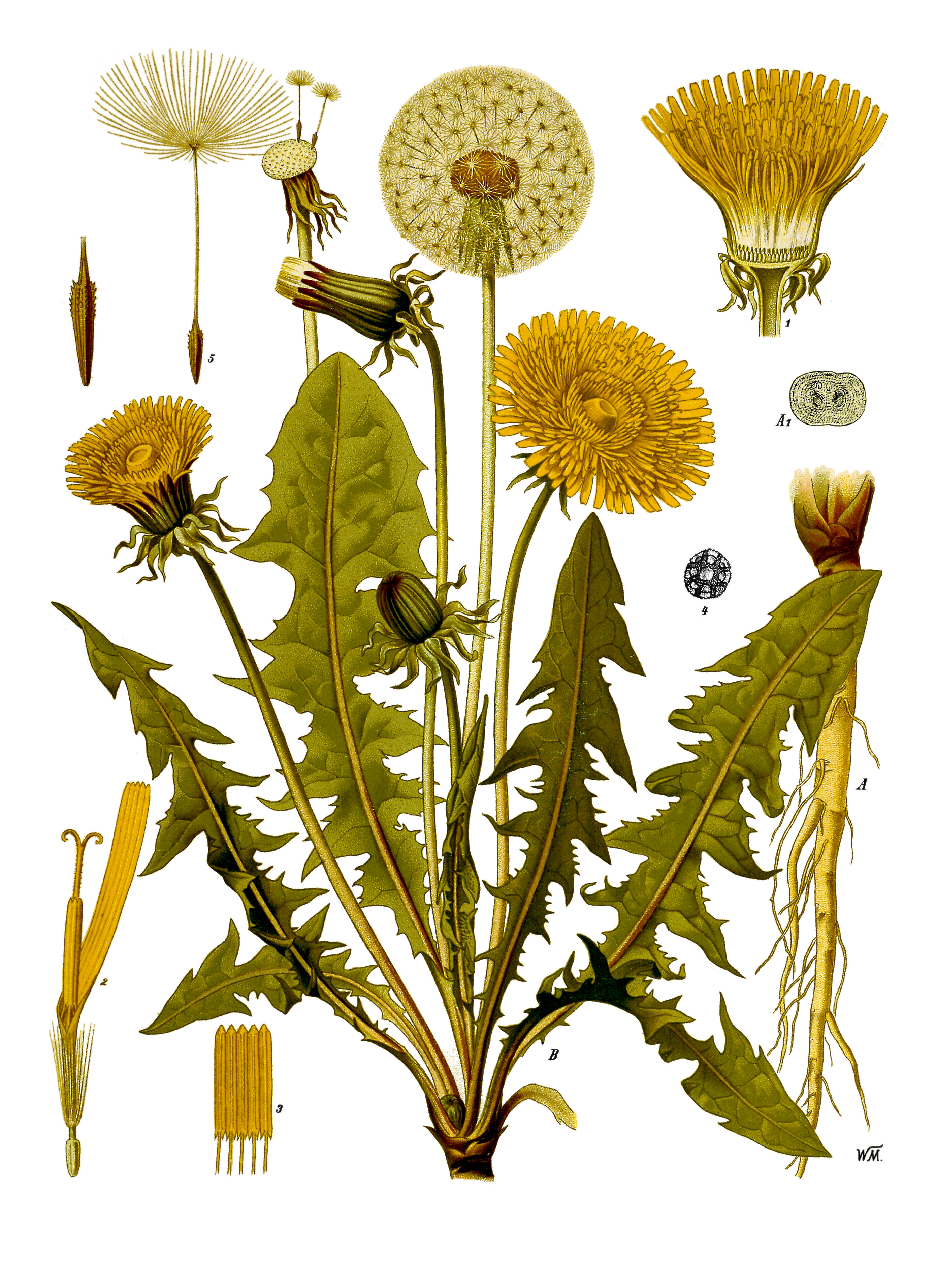
Teeth of the Lion*

File:Taraxacum officinale - Köhler–s Medizinal-Pflanzen-135.jpg
Source: Kohler's Medizinal-Pflanzen.
Accessed through Wikimedia Commons.
On a recent trip to Illinois, I stood admiring the cheery yellow dandelions in my sister's front yard. Combined with the new green grass, the stubby little flowers just shouted "Spring!" and on that clear, sunny day, I could think of no finer symbol to celebrate the season.

My sister confessed that she liked them, too, and that many people had been commenting on her bumper crop of dandelions. However, as she wryly noted, most of the comments she received were the opposite of appreciative and were more along the lines of, "Why don't you just get rid of them?"

We got a good chuckle over how far out of step with cultural norms we are, but the dissonance stayed with me. How did we decide as a culture that dandelions, which were once viewed as a valued source of food and medicine, an important soil enhancer, and a welcome harbinger of spring, were just weeds to be removed? When did we decide that a green lawn, devoid of diversity and kept that way through chemicals, was the ideal of outdoor beauty?

A quick trip around the Internet unearths an entire field of academic study on the history of lawns and their sociological meanings. Beginning with English manor homes, where expansive grounds were once used for animals and gardens, lawns evolved into recreation areas as the the tasks of growing food could be outsourced. That style was emulated in the new country of America, in places like Thomas Jefferson's Monticello, and really took off once early post-war suburbs were developed. The concept of a private patch of green became more entrenched with the growth of modern suburbs and their increasingly larger lots (and a standardized work week that allowed time to care for a lawn). As lawns continued to be symbols of land ownership and growing wealth, the concept of what makes a yard became more and more refined until all that's left is a monoculture of green, only sightly different than the felt on a pool table. Reading more about lawns and dandelions makes me realize, once again, the amazing power advertising has to reflect and amplify changing cultural norms so that within a few generations, a plant that was once respected for what it could provide became something to kill because it was different.

So. Dandelions. You don't have to dig far to see that throughout history, dandelions (Taraxacum officinale) have been, if not revered, then at least highly respected and useful. For example,
  • Their leaves provide excellent levels of Vitamins A, C, and K, and calcium, potassium, iron, and manganese. No wonder previous generations welcomed these plants after a long winter of eating root vegetables. Recently, a recipe for sauteed dandelion greens came across my FaceBook news feed. Could dandelions be next new thing that is really an old thing?
  • The flowers and roots can be used in a variety of beverages - tea, wine, coffee, and root beer  (when is the last time you thought about root beer as being made from, um, roots?)
  • Bees love 'em, butterflies and moths do, too. These early spring flowers are an important source of pollen for honeybees when there's not much else to snack on, and butterflies and moths also flock to the cheery flowers.
  • As any gardener who has tried to get rid of dandelions knows, the plant has a serious taproot. But this pain-in-the-neck root is actually beneficial - it efficiently brings up deep-soil nutrients to benefit nearby plants with shallower roots by adding minerals and nitrogen to the soil. 
  • The plant is a pharmacologic powerhouse, with compounds that have been used as diuretics, anti-inflammatories, anti-coagulants, and other important medicines. In fact, Canadian scientists have recently received a grant to evaluate the anti-cancer effects of certain components in dandelions based on promising research in animals. 
Obviously, dandelions are more than a pretty flower to be plucked by children and proudly presented to their moms to stick in glass jars. They are really important plants. So important that, apparently, dandelions were some of the plants that the colonists brought with them to America


I write all this not to encourage you to grow dandelions, but to think about what makes a yard. We spend so much time,  apply so many chemicals, spill so much fuel (17 million gallons each year!), use so much water, and experience so many injuries to create an unbroken field of green that, really, is nothing more than a green desert. Ron Jones, over at GreenBuilderMag has a nice blog post that references data from "The New American Landscape: Leading Voices on the Future of Sustainable Gardening," including the concept that Americans apply three times as much synthetic pesticides on their lawns as farmers do on a per acre basis. Those pesticides, some of which are banned in other countries,  have been linked to all sorts of health problems, for humans and animals, not to mention environmental issues. (Here's a link to a previous HealthTwisty post on some specific health issues related to atrazine.) 

The next time you read an ad for lawn chemicals, or 10 ways to get rid of dandelions, read it critically. Look at who is profiting from selling the concept of having a monoculture yard and consider why this standard of beauty evolved. Then think of what's missing: dandelions and clover and all the other local and regional plants that provide greenery, diversity, food for insects and animals, and encourage healthy soils


###

* A French physician named the plant "dent de lion" or "teeth of the lion" to describe the ragged shape of the leaves. 


Monday, March 19, 2012

Do I Feel A Paradigm Shift?


Well, perhaps not a complete paradigm shift. But the beginnings of one, anyway. The past few weeks have shown us that consumers are taking a stand for better foods and our concerns are being respected. For example:


Tell USDA to STOP Using Pink Slime in School Food!
"Pink Slime"
Pink Slime in the Limelight

Bettina Siegel, over at The Lunch Tray, started a petition to keep "pink slime" out of the meat purchased for school lunches. Pink slime is a low-quality mix of the bits and pieces that are left over after slaughtering - a mix that includes connective tissue and beef trimmings that had previously been used for pet food. In record time, over 235,000 people signed the petition, causing the USDA, which had purchased ground beef that contained over 7 million pounds of pink slime for use in school lunches, to announce that schools will have a choice about whether or not to use meat with pink slime in it. Amazing. Social media is powerful stuff.


Caramel Coloring is Not So Sweet

In fact, it can cause cancer. Because the state of California mandates that products containing known carcinogens carry a warning label, Coca-Cola and Pepsi have decided to use a slightly different, slightly less carcinogenic caramel coloring in their formulations. Of course, it took the threat of having to carry a warning label on their products before the manufacturers decided to make the change, but it's a good example of how tough policies can protect consumers and force change.


Food Waste = Energy Waste

NPR had a nice story about food waste, similar to the message in the infographic that HealthTwisty recently showcased. A 2010 article published in Environmental Science & Technology calculated that the food wasted in the United States each year is equivalent to wasting approximately 350 million barrels of oil. Recognition is growing regarding how much energy we waste when we waste food.


All good stuff, no? Sometimes, progress happens so gradually that we don't recognize it is happening. Only after connecting the dots do we see that perhaps we are headed in the right direction. Granted, we're getting there slowly, but consciousness is rising and things are happening.

###

Sunday, March 4, 2012

Hunger Games


Like many people, I am looking forward to the film adaptation of The Hunger Games Suzanne Collins' post-apocalyptic book in which hunger, famine, and food security play starring roles.

While the narrative arc of the book focuses on the life-and-death competition between the teenagers representing the 12 districts in what was once the United States, the effects that food (in)security have had, and continue to have, on these young people is never far from the surface. When sizing up her competitors in the Hunger Games, the book's protagonist Katniss notes

"Almost all of the boys and least half of the girls are bigger than I am, even though many of the tributes [competitors] have never been fed properly. You can see it in their bones, their skin, the hollow look their eyes."

Like much science fiction, The Hunger Games is based on hard truths. Food inequality is a major theme in the book, as it is in our country and our world. So when I ran across a nifty infographic on the equally nifty Food and Tech web site with that same theme I wanted to share it (with permission, of course).

The graphic, which was assembled by the folks at  Public Health Degree, focuses on the issues of Want and Waste. As in The Hunger Games, many people worldwide are wanting for food, while a relative few have more than they need to the point of wastefulness. Here's the intro from Public Health Degree's site that explains the background, including the startling statistics that 1 in 7 people in the world are chronically malnourished and Americans (in the US) waste about 40% of their food.

I think it's a beautiful infographic, packed with accessible information. Importantly, it provides practical steps that individuals can take to address the problems. I love that. Too often, we get stuck and all bummed out about the problems in the world because they can seem so big. But change begins with that first step, and Public Health Degree gives us some baby steps to get started.


The Food Crisis


###


Friday, March 2, 2012

Pretty Things


Nikon Small World winners!


Operating under the premise that everything looks better blown up and in color, Nikon has sponsored a Small World contest annually since 1997.


Working scientists and armchair scientists alike submit their best images to this competition.


And the good news is that, even though it's March, it's not too late to snag a calendar with images like this beauty:


It's a blade of grass like I've never seen before. That's because it's taken at 200x magnification through a microscope.

The blade of grass was the 2nd place winner in 2011. The first place winner was this magnificent, but sort of creepy, view of a green lacewing larva at 20x magnification (below). Now we know where those science fiction movie directors get their ideas.


I'm liking this wreath-y view of mammalian cells stained for various proteins and organelles. 


current image


What a fun way to look at cells, bugs, and bacteria. Don't worry physicists, there is something for you, too: images of elements, materials, and surfaces. Check out this image of sand:


No wonder my feet get sore at the beach.

You can see the 2011 winners here, but if you've got a lot of time, you can see all of the winners since 1997 here.

I love the way the images on the web site are framed in slide casings. Remember when slides were the best medium for high-quality photos? Me, too.


###